

Why Winging It Is Overrated (And How a Solid Travel Itinerary Saves Your Trip)
Look, I get it. There’s something romantic about throwing caution to the wind and seeing where the road takes you. But here’s what nobody tells you about spontaneous travel: you’ll spend half your vacation Googling “best restaurants near me” while standing in the rain, and the other half wondering why that “hidden gem” turned out to be a tourist trap with a 40-minute wait.
A travel itinerary isn’t about sucking the fun out of your trip; it’s about maximizing it. Think of it as your backstage pass to actually experiencing a place instead of just surviving it. I’ve learned this the hard way, standing in a sold-out museum in Barcelona, ticket-less and defeated, while tourists with confirmed reservations breezed past me.
So whether you’re planning a 7-day travel itinerary through Europe or mapping out a family vacation itinerary that won’t end in tears (yours or the kids’), this guide will walk you through everything you need to know.
What Exactly Is a Travel Itinerary (And Why Should You Care)?
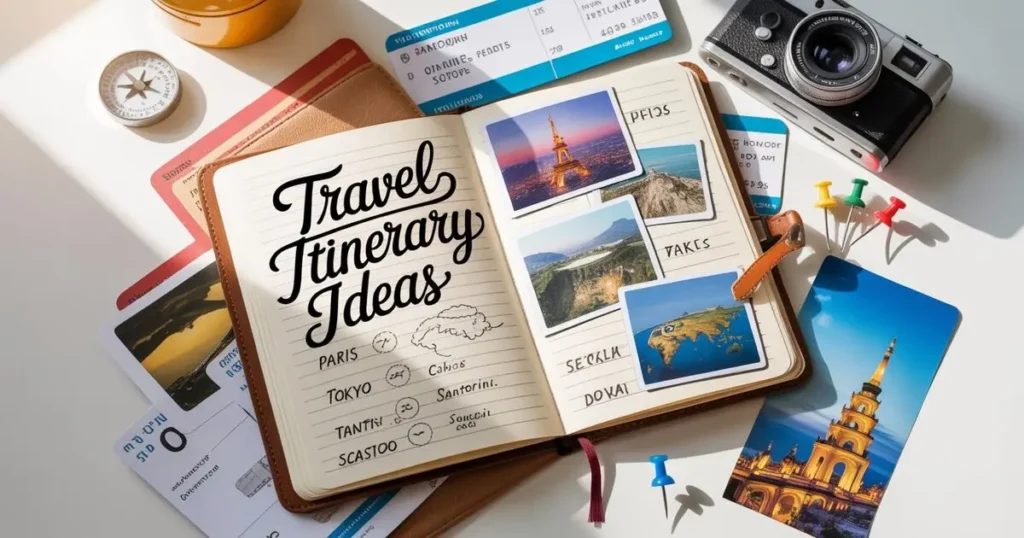
A travel itinerary is basically your trip’s game plan; a detailed outline of where you’re going, when you’re going, and what you’re doing when you get there. It’s your travel schedule, your travel route, and your sanity-saver all rolled into one document.
But here’s why it actually matters: a well-crafted travel agenda does three critical things. First, it saves you money because you’re not making desperate, overpriced last-minute bookings. Second, it saves time; you’re not standing on a street corner debating whether to go left or right. Third, it gives you peace of mind. When you know your accommodation, transportation, and major activities are locked in, you can actually relax and enjoy the experience.
The difference between travelers who rave about their trips and those who come back exhausted? Usually, it’s the itinerary.
15 Travel Itinerary Ideas That’ll Transform How You Explore
1. The Classic 7-Day Europe Circuit
You’ve got a week, limited PTO, and a burning desire to see multiple countries without losing your mind. The best travel itinerary for Europe hits three cities maximum; any more and you’ll spend your vacation on trains instead of experiencing actual culture.
Try this: Amsterdam (2 days) → Brussels (1 day) → Paris (3 days) → travel day. You’ll hit the highlights without feeling like you’re speed-running through the continent. Book your trains in advance, choose accommodations near central stations, and resist the urge to add “just one more city.”
Pro tip: Use the Cotopaxi Allpa 35L Travel Backpack for this kind of multi-city hop. It’s carry-on friendly, which means no checked bag fees and no waiting at baggage claim while your vacation ticks away.
2. The Ultimate Family Vacation Itinerary (That Won’t End in Meltdowns)
Creating a travel itinerary for family vacation requires strategic thinking. You need to balance adult interests with kid attention spans, and you absolutely need built-in downtime.
Here’s the formula: alternate active days with chill days. Day one might be theme parks, day two is pool time and easy local exploration. Mix educational stuff (that castle tour) with fun stuff (that ice cream shop you researched for three hours). And always, always, build in 30-minute buffers between activities because someone will need a bathroom break at the worst possible time.
Must-have gear: Packing cubes are non-negotiable for family trips. When you can quickly grab the kids’ clothes without unpacking three suitcases, you’ll thank me.
3. The Budget Backpacker’s Southeast Asia Loop
For budget travel itinerary ideas, Southeast Asia delivers maximum experience for minimum spend. A solid travel route might look like: Bangkok (3 days) → Chiang Mai (4 days) → Hanoi (3 days) → Hoi An (3 days) → Ho Chi Minh City (2 days).
Stay in hostels, eat street food, and use overnight buses or trains to save on accommodation. Your daily budget can hover around $30-50 if you’re strategic. The key is booking accommodation and major transportation in advance while leaving daily activities flexible.
Travel hack: The Anker Power Bank becomes your best friend in regions where outlets are scarce and you’re navigating entirely via smartphone GPS.
4. The Romantic Honeymoon Itinerary
A travel itinerary for honeymoon deserves more thought than “pick a beach and hope for the best.” Consider destinations with variety: Bali offers beaches, culture, and adventure. Greece gives you islands, history, and incredible sunsets. Costa Rica delivers romance with a side of zip-lining.
Plan 60% structured activities and 40% unstructured time. Book at least two special experiences, a private dinner, a couples’ massage, a sunrise hike, but leave room for spontaneous discoveries. And for the love of all that’s holy, confirm all reservations twice.
Insider tip: Pack the Mario Badescu Face Spray Travel Set. Long flights and tropical humidity can wreck your skin, and nobody wants to look like a tomato in their honeymoon photos.
5. The Solo Travel Itinerary (For the Adventurous Introvert)
Solo travel itinerary ideas need to balance independence with safety. Choose destinations known for solo travelers: Portugal, New Zealand, Japan, or Canada. Your trip planning should include backup plans and check-in times with friends back home.
Stay in social hostels if you want company, boutique hotels if you need solitude. Book group tours for day trips, you’ll meet people without the pressure of constant interaction. And always share your travel itinerary with someone back home using one of the apps we’ll discuss later.

6. The Adventure Junkie’s Adrenaline Rush
Adventure travel itinerary ideas should cluster activities geographically to maximize time. New Zealand’s South Island in 10 days: Queenstown (4 days) for bungee jumping and skydiving → Wanaka (2 days) for hiking → Franz Josef (2 days) for glacier treks → Abel Tasman (2 days) for kayaking.
Book adventure activities in advance; popular slots fill up fast. Build in rest days because your body will need them. And yes, travel insurance is non-negotiable for this type of trip.
Essential gear: The Adventure Essentials Survival Kit isn’t paranoia, it’s preparation. When you’re miles from civilization, a compact emergency kit makes sense.
7. The Beach Bum’s Paradise Plan
Beach travel itinerary plans work best when you resist the urge to over-schedule. Pick one base location rather than island-hopping every two days. The Caribbean, Thai islands, or Greek islands all offer this possibility.
Your daily travel agenda might look like: morning beach time, lunch at a local spot, afternoon activity (snorkeling, paddleboarding, or absolutely nothing), sunset cocktails, dinner. Repeat with variations. Book 1-2 excursions for the week, but otherwise embrace the slow pace.
Beach essential: The NanoDry Towel dries impossibly fast and takes up minimal space, game-changing for beach trips where you’re constantly wet.
8. The Cultural Immersion Experience
Cultural travel itinerary suggestions require more research upfront but deliver richer experiences. Spend serious time in fewer places. Two weeks in Japan might mean Tokyo (4 days) → Kyoto (5 days) → Osaka (3 days) → rural ryokan experience (2 days).
Prioritize experiences over sightseeing: cooking classes, language exchanges, staying with locals, attending local events. Read up on customs beforehand, cultural faux pas can impact your experience.
Smart move: The Joomfeen Travel Power Adapter works worldwide, because the last thing you need is discovering your devices are useless in a new country.
9. The Road Trip Itinerary (America’s Backyard Edition)
Road trip itinerary ideas thrive on flexibility within structure. Map your route with must-see stops but leave wiggle room for detours. The Pacific Coast Highway, Route 66, or the Great Smoky Mountains all offer iconic American road trip experiences.
Plan driving days of 4-6 hours maximum, longer and you’ll miss actually experiencing places. Book accommodation in advance for popular stops, leave others open-ended. Download offline maps because cell service gets spotty.
Road trip necessity: The 50 States Travel Journal lets you document the journey as it unfolds, and trust me, you’ll forget half the random amazing stops if you don’t write them down.
10. The Last-Minute Long Weekend
Last-minute travel itinerary tips revolve around working with what’s available. Check flight deals on Wednesday afternoons. Choose destinations 2-4 hours away maximum. Focus on cities with concentrated attractions so you’re not wasting precious time in transit.
Your customizable travel itinerary might be: fly out Friday evening, full day Saturday, full day Sunday, fly back Monday morning. Pick 2-3 must-dos and let the rest happen organically.
Time-saver: The Peak Design Travel Backpack 45L serves as a carry-on and daypack, so you’re not lugging multiple bags for a short trip.
11. The Multi-Gen Family Reunion Trip
When you’re planning for grandparents, parents, and kids, your vacation itinerary needs universal appeal. Choose all-inclusive resorts or vacation rentals with common spaces. Plan one daily group activity that works for all ages, then let people break off.
Destinations like national parks, beach resorts, or cruise ships naturally accommodate different activity levels. And crucially, give each family unit some private time, constant togetherness gets exhausting.
Organization hero: Packing cubes help each family member maintain their own organized space, reducing the chaos of multiple people living together.
12. The Digital Nomad’s Working Travel Route
Balancing work and exploration requires a realistic travel schedule. Choose destinations with reliable wifi, comfortable workspaces, and reasonable time zones relative to your work. Lisbon, Bali, Mexico City, and Chiang Mai top the list.
Stay 2-4 weeks per location; constant movement kills productivity. Your travel planner should block work hours as sacred and exploration during off-hours. Join coworking spaces to meet other nomads.
Productivity essential: The Travel Bluetooth Folding Keyboard transforms your tablet or phone into a legitimate work setup when your laptop needs a break.
13. The Festival Circuit Itinerary
Building a travel route around festivals, music, film, food, cultural gives your trip built-in highlights. Plan accommodation 6-12 months in advance for major events. Your itinerary should include rest days between festivals because they’re exhausting.
Consider: Glastonbury in the UK, Oktoberfest in Munich, Carnival in Rio, Coachella in California, or the Lantern Festival in Thailand. Research local customs and festival-specific rules.
Festival survival: Silicone Travel Containers let you bring essential toiletries since festival camping often lacks basic facilities.
14. The Wellness Retreat Reset
A travel itinerary focused on wellness strips away the usual tourist chaos. Choose destinations known for this: Bali, Costa Rica, Sedona, or Thailand. Book structured programs at retreats that handle planning for you: yoga, meditation, healthy meals, spa treatments.
Your days follow the retreat schedule, but book extra time before or after for gentle exploration. This isn’t about cramming in sights; it’s about restoration.
Comfort item: The Loop Blackout Eye Mask Pillow ensures quality rest even in shared retreat spaces or during travel days.
15. The Surprise Destination Adventure
Feeling bold? The surprise trip planning method: set your budget, general timeframe, and no-go list (war zones, extreme climates), then use flight deal sites to book whatever’s cheapest. Build your itinerary after booking based on the destination.
This works best for flexible travelers comfortable with uncertainty. Research intensely once you know where you’re going, but embrace the initial spontaneity.
How to Actually Create Your Travel Itinerary (The Step-by-Step)
Creating a detailed travel itinerary doesn’t require a PhD in logistics, but it does need methodology.
Start broad, then narrow. Pick your destination and travel dates first. Research the best times to visit, as monsoon season or political unrest can derail plans. Determine your total budget, including flights, accommodation, activities, food, and emergency funds.
Map your must-dos. List absolute non-negotiables, activities or sites you’d regret missing. Then list nice-to-haves. This prevents overpacking your schedule while ensuring priorities get time slots.
Work backwards from big bookings. Reserve flights first, then accommodation, then major activities requiring booking. This creates your travel schedule’s skeleton. Fill in daily details: meals, transportation, downtime, around these anchors.
Build in buffer time. Transportation delays happen. You’ll get lost. Things take longer than expected. Add 25% more time than you think you need for every activity.
Create a backup plan. What happens if a flight is canceled? If the weather closes an attraction? Having plan B reduces travel stress exponentially.
Document everything. Your itinerary template should include confirmation numbers, addresses, phone numbers, and hours of operation for every booking. Store copies offline and online.
Essential Tools and Apps for Travel Itinerary Organization
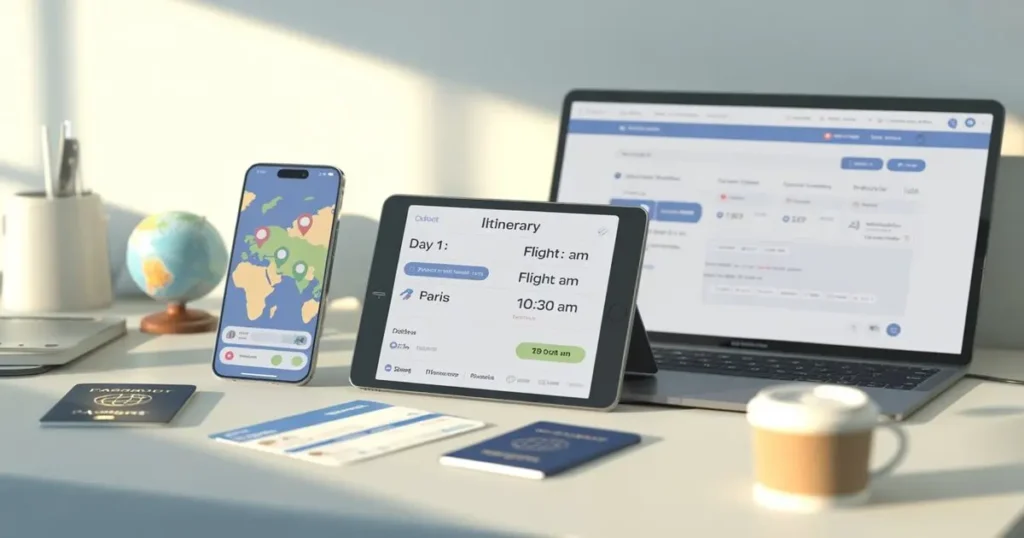
Let’s talk about the travel itinerary app options that’ll actually make your life easier.
TripIt remains the gold standard. Forward your confirmation emails, and it automatically creates a master itinerary. It’s magic for keeping everything in one place.
Google Maps allows you to save places, create custom maps of your route, and access them offline. Underrated for travel itinerary organization tips.
Notion or Evernote work beautifully for detailed planners who want full customization. You can embed maps, attach documents, and link to resources.
Trail Wallet helps track spending against your budget, critical for budget travel itinerary ideas.
For collaboration, Google Docs lets multiple people access and edit the travel planner in real time, perfect for group trips.
Packpoint generates packing lists based on your destination, dates, and activities. Pair it with a travel itinerary packing list for comprehensive preparation.
Insert table here:
| App/Tool | Best For | Key Feature |
|---|---|---|
| TripIt | Automatic organization | Email forwarding creates itinerary |
| Google Maps | Route planning & offline access | Custom maps with saved locations |
| Notion | Detailed customization | All-in-one planning workspace |
| Trail Wallet | Budget tracking | Real-time expense monitoring |
| Packpoint | Packing prep | Weather-based packing lists |
Organizational lifesaver: The Travel Cord Roll keeps all your charging cables tangle-free, because hunting through your bag for the right cable in an airport is nobody’s idea of fun.
How Flexible Should Your Travel Plans Actually Be?
Here’s the eternal debate: rigid travel plans versus go-with-the-flow spontaneity.
The sweet spot? Structure your major elements: accommodation, transportation between cities, and expensive activities, while leaving daily scheduling loose. Book that museum ticket in advance, but don’t plan every hour of every day.
I use the 70/30 rule: 70% planned, 30% flexible. This means I know where I’m sleeping and how I’m getting there, but I’m not locked into specific restaurants or minor attractions. If locals recommend something or weather changes plans, I can pivot without destroying the whole itinerary.
Customizable travel itinerary templates help here, built in designated “flex time” blocks where you can add spontaneous discoveries or simply rest.
The exception? High-season travel to popular destinations requires more rigidity. That Eiffel Tower reservation at sunset during July? Book it months in advance and stick to the plan.
Budgeting Like a Pro Using Your Itinerary
Your travel itinerary is actually your best budgeting tool if you use it correctly.
Start by categorizing expenses: transportation, accommodation, activities, food, and miscellaneous. As you build your itinerary, assign costs to each element. That volcano tour? $150. Hostel? $30/night. Flights? Already booked at $450.
Track cumulative spending as you plan. If you’re hitting your budget ceiling before planning the second half of your trip, you’ll catch it early and adjust, maybe switching to cheaper accommodation or cutting a pricey activity.
Build in a 15-20% buffer for surprise expenses. Your phone will break. You’ll discover an unmissable side trip. The taxi will cost more than expected.
Use your vacation itinerary to spot money-saving opportunities. Clustering activities geographically saves transportation costs. Choosing accommodation with kitchens cuts food expenses. Booking combination tickets for attractions offers discounts.
Money management: The Zippered Travel Wallet keeps cash and cards organized and secure. Losing your wallet abroad is a budget disaster and vacation nightmare.
What Actually Belongs in Your Travel Itinerary?
Beyond the obvious flights and hotels, a comprehensive travel agenda includes details people often forget:
Transportation specifics: Train numbers, bus companies, car rental confirmations, parking information, airport transfer details. Include addresses and phone numbers.
Accommodation details: Full addresses, check-in times, wifi passwords, and emergency contact numbers. Note special requirements you’ve requested.
Activity confirmations: Booking references, meeting points, what to bring, dress codes, and cancellation policies.
Restaurant reservations: Especially for must-try places in foodie destinations. Include addresses since restaurant names can be tricky to find.
Emergency information: Embassy contacts, travel insurance details, credit card international hotlines, copies of important documents.
Health considerations: Pharmacy locations, prescription information, and allergy translations in the local language.
Important phone numbers: Hotel, tour operators, emergency services in each country, and travel companions’ contact info.
Practical details: Local currency and exchange rates, common phrases in the local language, cultural etiquette notes, tipping customs.
Backup plans: Alternative activities if weather disrupts plans, nearby medical facilities, 24-hour convenience stores or restaurants.
Sharing Your Itinerary for Safety (Because Your Mom Is Right to Worry)
Here’s the thing about travel safety nobody wants to discuss until something goes wrong: people back home should know your travel schedule.
Use TripIt or Google Docs to share your detailed itinerary with trusted friends or family. Update it if plans change. Include accommodation addresses, activity booking times, and transportation between cities.
Set regular check-in times. A simple “made it to Prague safely” text takes five seconds but provides tremendous peace of mind.
For solo travelers, this isn’t optional; it’s essential. If something happens and you miss multiple check-ins, someone knows your last known location and can contact local authorities if necessary.
Don’t post your travel route publicly on social media until after you’ve left locations. Broadcasting an empty home invites problems.
Safety essential: The Portable Charger keeps your phone alive for emergency calls and GPS navigation when you need it most.
Special Considerations for Different Trip Types
Adventure trips need detailed travel plans including emergency protocols, guide contact information, and physical preparation notes. Know the nearest medical facilities.
Beach vacations benefit from loose itineraries but should lock in key accommodations during peak season. Research beach conditions, water safety, and any seasonal concerns like jellyfish or riptides.
Cultural trips require more research upfront; understanding customs, appropriate dress, religious sensitivities, and historical context enhances experiences dramatically.
Food-focused travel means booking popular restaurants immediately. Some require reservations 30-90 days in advance. Build your trip planning around culinary experiences.
Photography trips need itineraries accounting for golden hour timing, weather patterns, and location scouting time. That perfect shot requires planning.
Common Travel Itinerary Mistakes (And How to Avoid Them)
Overplanning ranks as the number one mistake. Your vacation itinerary shouldn’t require military precision. If you’re scheduled from 7 am to midnight daily, you’re not on vacation; you’re on a death march.
Underestimating travel time between locations kills itineraries. That “two-hour” journey often takes four when you factor in waiting, delays, and getting lost.
Ignoring your personal travel style. Are you a morning person or a night owl? Fast-paced or leisurely? Force yourself into the wrong style and you’ll hate the trip.
Not researching closing days. Many museums and attractions close on Mondays or on specific days. Failing to check means disappointment.
Forgetting meal planning. Arriving starving at 3 pm in a country where restaurants close between lunch and dinner? You’ll eat overpriced tourist food out of desperation.
Skipping travel insurance. It’s boring and feels unnecessary until your appendix ruptures in Bali or political unrest cancels your flights.

Quick-Reference Travel Itinerary Checklist
Before you finalize your travel planner, run through this checklist:
- ✓ All transportation booked and confirmed
- ✓ Accommodation reserved for every night
- ✓ Passport valid for 6+ months beyond return date
- ✓ Necessary visas obtained
- ✓ Vaccinations or health requirements completed
- ✓ Travel insurance purchased
- ✓ Credit cards notified of travel dates/locations
- ✓ International phone plan activated or local SIM researched
- ✓ Critical reservations made (popular restaurants, tours, museums)
- ✓ Itinerary shared with someone at home
- ✓ Digital and physical copies of important documents
- ✓ Emergency contacts list compiled
- ✓ Local emergency numbers researched
- ✓ Weather forecast checked for packing adjustments
- ✓ Accommodation addresses programmed into maps
- ✓ Transportation options from airports researched
- ✓ Daily budget calculated and realistic
- ✓ Plug adapters and chargers packed
- ✓ Buffer time built into schedule
- ✓ Backup activities planned for weather contingencies
Comfort addition: The Travel Neck Pillow makes those long flights bearable, arriving exhausted kills day one of your carefully planned itinerary.
Making Your Travel Dreams Actually Happen
Here’s what nobody tells you about creating the perfect travel itinerary ideas: the planning is half the fun. Seriously. There’s something deeply satisfying about mapping out adventures, researching hidden gems, and imagining yourself sipping wine in Tuscany or hiking through Patagonia.
But the real magic happens when you stop endlessly planning and actually book something. Fear and perfectionism kill more trips than lack of money or time. Your itinerary will never be perfect. There will always be one more thing to research, one more hotel to compare, one more review to read.
Set a deadline. On X date, you book the flights. Period. Everything else can be adjusted, but without that first commitment, your travel plans remain Pinterest boards and daydreams.
Start with one trip, maybe that long weekend you’ve been postponing or the anniversary trip that keeps getting “maybe next year.” Use the frameworks and travel itinerary organization tips we’ve covered. Learn what works for your style. Adjust for the next adventure.
And remember: the worst itinerary executed is infinitely better than the perfect itinerary that never happens. Some of my best travel memories came from itinerary failures, the missed connection that led to an unexpected overnight in an amazing city, the closed museum that meant discovering a local festival instead.
Final essential: Lightweight slippers seem frivolous until you’re in your tenth hotel room, wishing you didn’t have to wear dirty shoes or walk barefoot on questionable carpet.
Your Next Step: Stop Reading, Start Planning
You’ve got the knowledge. You’ve got the frameworks. You’ve got a list of gear that’ll make the actual traveling smoother. Now you need to actually create your travel itinerary.
Open a Google Doc right now. Write your dream destination at the top. Pick dates, even tentative ones. Start researching flights. That’s it. That’s how every great trip begins.
The world isn’t getting any smaller, and your bucket list isn’t getting any shorter. Whether you’re crafting a 7-day travel itinerary through Southeast Asia or planning an epic road trip itinerary across America, the first step is committing to the idea that you’re actually going to do this.
Your future self, the one posting sunset photos from Santorini or hiking through New Zealand, is waiting for you to stop planning and start booking. What are you waiting for?
Ready to make it happen? Take that first step today. Pick your destination, check flight prices, and start building your travel schedule. Your adventure is waiting, and with a solid itinerary, it’s going to be exactly what you’ve been dreaming about.
Now go forth and wander (but, you know, with a plan).