
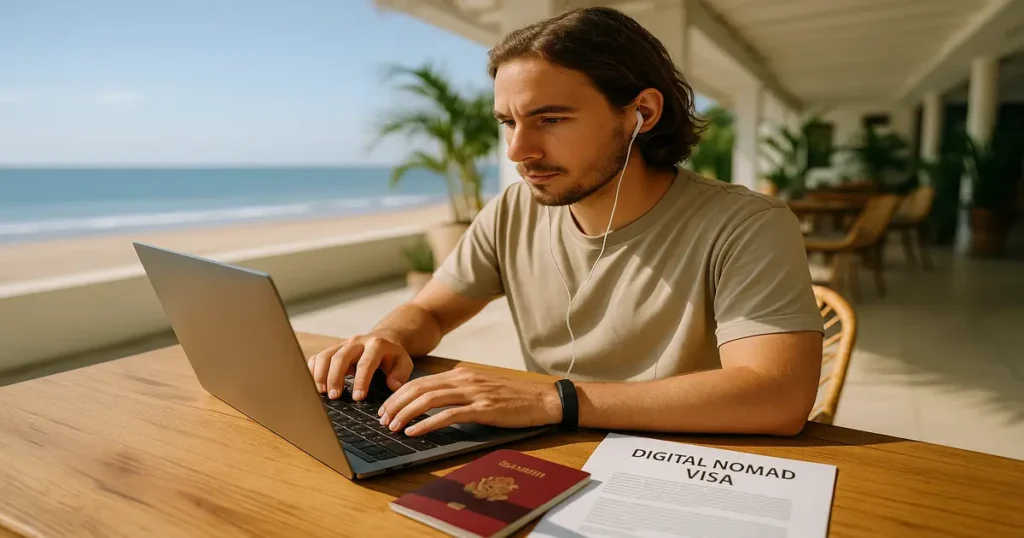
Digital Nomad Visas in 2025: Your Guide to Living and Working Anywhere
Picture this: You’re sipping espresso at a sun-drenched café in Lisbon, laptop open, ocean breeze flowing through your hair, and your biggest decision is whether to hit the beach after your 3 PM meeting or explore the cobblestone streets of Alfama. Sound like a fantasy? Not anymore.
Welcome to the era of the digital nomad visa, your golden ticket to trading cubicles for coastlines, commutes for adventures, and the 9-to-5 grind for a life that actually feels like living. And here’s the thing: in 2025, more countries than ever are rolling out the red carpet for remote workers like you. But before you pack your bags and book that one-way flight, let me walk you through everything you need to know about securing your digital nomad visa and making this dream a reality.
What Exactly Is a Digital Nomad Visa, Anyway?
Let’s start with the basics. A digital nomad visa is essentially a legal permit that allows you to live in a foreign country while working remotely for an employer or clients based elsewhere. Think of it as a remote work visa that recognizes what we all know: geography no longer defines productivity.
Unlike tourist visas (which technically don’t allow you to work) or traditional work visas (which require local employment), digital nomad visas exist in this beautiful middle ground. They’re designed specifically for people who earn their income online and want to experience life abroad without the bureaucratic nightmare of traditional immigration.
I’ll be honest, when I first heard about these visas, I was skeptical. It sounded too good to be true, like one of those “make money from your laptop” scams. But here we are in 2025, and digital nomad visas have become legitimate, sought-after programs that governments worldwide use to attract talented remote workers and their spending power.
The Digital Nomad Visa Countries Leading the Pack in 2025
So, where can you actually go? The digital nomad visa countries list has exploded in recent years, and 2025 is shaping up to be the best year yet for location-independent professionals.
Top destinations include:
Portugal – The OG of digital nomad havens, offering a straightforward application process and one of the most vibrant expat communities you’ll find. Lisbon and Porto are buzzing with remote workers, and the weather? Chef’s kiss.
Spain – With its new digital nomad visa, Spain is making serious moves. Barcelona, Valencia, and Madrid offer world-class infrastructure, incredible food, and a lifestyle that balances work and pleasure like nowhere else.
Croatia – If you want Mediterranean vibes without the Mediterranean price tag, Croatia’s your spot. Dubrovnik and Split offer stunning coastlines, reliable internet, and a growing community of nomads.
Estonia – The tech-savvy Nordic nation pioneered the digital nomad visa movement and continues to offer one of the most streamlined application processes. Plus, e-Residency? Game-changer.
Mexico – Closer to home for Americans, Mexico’s temporary residency visa functions like a digital nomad visa. Playa del Carmen, Mexico City, and Tulum are overflowing with remote workers for good reason.
Thailand – The Land of Smiles is getting serious about attracting digital nomads. Chiang Mai remains a legendary hub for remote workers seeking affordability and community.
UAE (Dubai) – If luxury living and zero income tax sound appealing, Dubai’s virtual working program offers a high-end digital nomad experience.
Costa Rica – Pura vida isn’t just a saying; it’s a lifestyle. With beautiful beaches, incredible biodiversity, and solid infrastructure, Costa Rica makes remote work feel like a perpetual vacation.
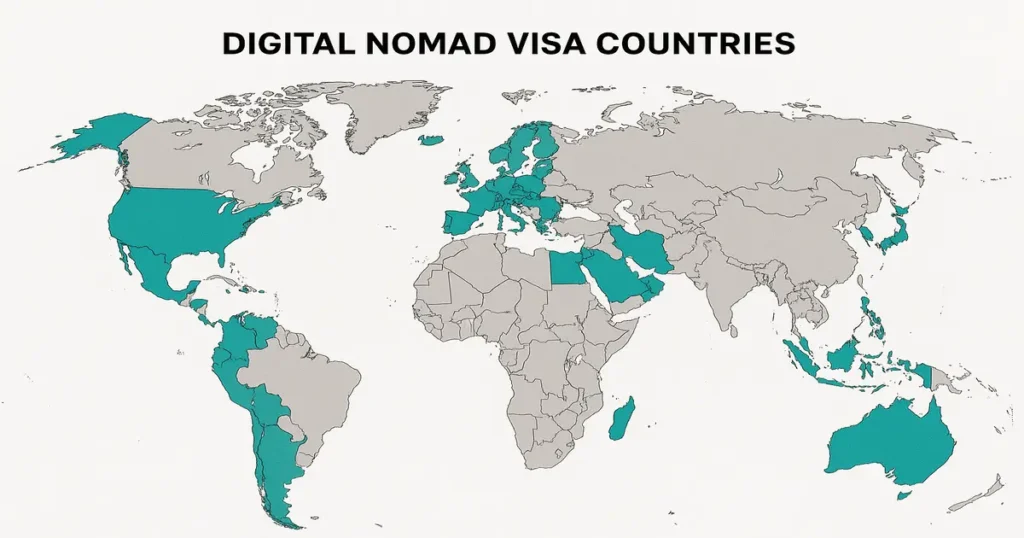
The beauty of 2025 is choice. Whether you’re chasing summer year-round, seeking cultural immersion, or just want affordable living with fast WiFi, there’s a best digital nomad visa option that fits your vibe.
Digital Nomad Visa Requirements: What You’ll Actually Need
Let’s talk logistics. Understanding digital nomad visa requirements is crucial before you start daydreaming about your new life abroad. While specifics vary by country, most programs share common eligibility criteria.
The Universal Requirements
Proof of Remote Employment or Income – This is non-negotiable. Countries want to see that you’re earning money outside their economy. Whether you’re employed by a foreign company, freelancing, or running your own business, you’ll need documentation proving your remote work arrangement and income stability.
Minimum Income Threshold – Here’s where it gets real. Most countries require digital nomad visa proof of income ranging from $2,000 to $4,000 monthly. Some high-cost destinations like Switzerland or Singapore ask for considerably more. Portugal, for instance, requires proof of at least €3,040 per month. It’s not about being rich; it’s about demonstrating you won’t become a burden on their social systems.
Health Insurance Coverage – The digital nomad visa health insurance requirements are pretty standard across the board. Countries want assurance you’re covered for medical emergencies. Plans like SafetyWing’s Nomad Insurance are specifically designed for digital nomads, offering global coverage that meets most visa requirements without breaking the bank.
Valid Passport – This seems obvious, but make sure your passport has at least six months’ validity beyond your intended stay. I’ve seen people get denied at the application because their passports were expiring too soon.
Clean Criminal Record – Most countries require a police clearance certificate from your home country. Processing times vary, so start this early.
Proof of Accommodation – Whether it’s a rental agreement, hotel booking, or letter from a host, you’ll need to show where you plan to stay. Don’t worry, most countries accept initial proof with the option to change later.
| Country | Minimum Monthly Income | Annual Income Required |
|---|---|---|
| Portugal | €3,040 ($3,280) | ~$39,360 |
| Spain | €2,160 ($2,330) | ~$27,960 |
| Croatia | €2,300 ($2,480) | ~$29,760 |
| Estonia | €3,504 ($3,780) | ~$45,360 |
| Mexico | $1,620 | ~$19,440 |
How to Apply for a Digital Nomad Visa: The Step-by-Step Process
Ready to dive in? The digital nomad visa application process can seem daunting, but I’ll break it down into manageable steps. Think of it as a slightly complicated recipe. Follow the instructions, don’t skip ingredients, and you’ll get the result you want.
Step 1: Choose Your Destination
Research is everything. Consider cost of living, time zones (if you’re working with clients or teams in specific regions), language barriers, climate, and community. Join Facebook groups or Reddit communities for digital nomads in your target country; firsthand experiences are invaluable.
Step 2: Gather Your Documentation
Start collecting everything early. Bank statements typically need to cover 3-6 months. Employment contracts should be current and clearly state your remote work arrangement. Insurance policies need to meet specific coverage minimums. Use services like Global Citizen Solutions if you want professional assistance navigating requirements.
Step 3: Secure Health Insurance
Don’t sleep on this. Many applications get rejected because the insurance doesn’t meet requirements. World Nomads and SafetyWing offer plans specifically tailored to digital nomad visa needs, with coverage accepted by most countries.
Step 4: Submit Your Application
Some countries allow online applications; others require in-person submission at embassies or consulates. Processing times range from two weeks to three months, so plan accordingly. Budget $200-$500 for application fees, depending on the country.
Step 5: Wait (Patiently) and Follow Up
This is the hard part. Applications can take anywhere from 15 days (Estonia) to 90 days (Spain). Check your email regularly, respond promptly to requests for additional information, and resist the urge to book flights until you have approval.
Step 6: Arrange Your Move
Once approved, coordinate housing, flights, and logistics. Use Wise for setting up international banking, and consider joining coworking spaces like WeWork to network immediately upon arrival.
Can Family Members Join on a Digital Nomad Visa?
Here’s where things get interesting. The question of whether a digital nomad visa family accompanying is allowed depends entirely on the specific program, but I’ve got good news: many countries recognize that remote workers often have partners and kids.
Portugal, Spain, Croatia, and several others permit dependents, typically spouses and children under 18. However, you’ll need to show increased income to support them. Portugal, for example, adds 50% to the income requirement for a spouse and 30% for each child.
The process usually involves submitting additional documentation: marriage certificates, birth certificates, and proof that you can financially support everyone. Some countries, like Estonia, require separate applications for each family member, while others allow a single family application.
If you’re planning to bring the whole crew, factor in extra processing time and costs. But honestly? Experiencing a new culture as a family can be incredibly enriching. Just make sure you research schooling options if you have kids.
How Long Can You Stay on a Digital Nomad Visa?
The digital nomad visa duration and extension question is critical for planning your adventure. Here’s the typical breakdown:
Most digital nomad visas grant initial stays of 12 months, with options to renew for one or two additional years. Portugal offers one-year residence permits renewable for up to five years. Estonia’s program allows 12 months with potential extension to 18. Mexico’s temporary residency can stretch to four years before requiring renewal.
The cool part? Many programs offer pathways to permanent residency if you fall in love with your host country. Spain, Portugal, and several others count time on digital nomad visas toward residency requirements. After five to ten years (depending on the country), you could potentially apply for citizenship.
But let’s be real, few people commit to a decade before even visiting. The flexibility of annual renewals lets you test-drive life abroad without permanent commitment. If Barcelona isn’t your vibe after a year, you can move to Bali or Buenos Aires instead.
Pro tip: Keep meticulous records of your time in-country. Immigration authorities often require proof of continuous residence for renewals and permanent residency applications.
Working While on a Digital Nomad Visa: The Rules
Can you work for any employer while on a digital nomad visa? This is where nuance matters. Digital nomad visas specifically permit remote work for foreign employers or clients. The keyword is foreign.
You can absolutely work for your U.S.-based company while living in Portugal. You can freelance for clients worldwide. You can run your online business from a beach in Thailand. What you typically cannot do is work for local companies or take jobs within the host country’s economy.
Think of it this way: digital nomad visas are designed to bring foreign money into local economies without displacing local workers. You’re stimulating their economy through spending, rent, food, entertainment, and coworking spaces, while earning income from outside.
Some countries are strict about this; others are more flexible. Always verify specific restrictions for your chosen destination. And for the love of WiFi, don’t try to game the system. Immigration violations can result in deportation and a ban from returning.
Tools like Slack, Zoom, and Trello keep you connected with teams, while VPN services like ExpressVPN or NordVPN ensure secure connections across borders. Invest in a reliable mobile hotspot device like Skyroam Solis as a backup internet connection. Trust me, when the café WiFi crashes during your important presentation, you’ll thank me.
The Tax Implications: What About My Money?
Ah, taxes. Everyone’s favorite topic. Understanding the tax implications of a digital nomad visa is crucial, as the last thing you want is trouble with the IRS or foreign tax authorities.
Here’s the general framework: As a U.S. citizen, you’re required to file taxes regardless of where you live. However, the Foreign Earned Income Exclusion (FEIE) lets you exclude up to $120,000 of foreign-earned income from U.S. taxation if you meet certain requirements.
But, and this is a big but, you might also have tax obligations in your host country. It varies wildly. Some countries (like Portugal’s Non-Habitual Resident program) offer favorable tax treatment for new residents. Others require you to pay local taxes if you stay beyond a certain period (often 183 days, establishing tax residency).
This gets complicated quickly, which is why services like My Expat Taxes exist. They specialize in helping digital nomads navigate multi-jurisdictional tax obligations without accidentally committing fraud or paying twice.
General advice:
- Keep detailed records of income, location, and days spent in each country
- Consult with an expat tax professional before making moves
- Understand tax treaties between the U.S. and your host country
- Set aside money for tax obligations, don’t get caught short
Tools like TurboTax Expat can help with filing, but for complex situations, professional help is worth the investment.
Essential Tools and Products for Digital Nomad Success
Making the digital nomad lifestyle work requires more than just a passport and a laptop. Here are products and services that’ll make your transition smoother:
Connectivity & Security
- VPN subscriptions protect your data on public networks
- Portable WiFi devices ensure you’re never truly offline
- Travel routers like GL.iNet let you create secure networks anywhere
Financial Management
- Multi-currency accounts with Wise minimize conversion fees
- XE Currency apps help you track real-time exchange rates
- Cloud storage solutions like Dropbox and Google Drive keep documents accessible globally
Professional Development
- Platforms like We Work Remotely and Remote OK list remote job opportunities
- Udemy and Coursera offer skills training to stay competitive
Travel Essentials
- Quality travel backpacks like Nomatic are designed for constant movement
- High-performance laptops (MacBook Pro or Dell XPS) that handle demanding work
- Noise-canceling headphones for focusing anywhere
Learning & Integration
- Language apps like Duolingo and Babbel help you connect with locals
- Comprehensive guides from Citizen Remote provide insider knowledge
The investment in quality gear pays dividends when you’re moving between countries every few months. Don’t cheap out on essentials; your productivity and comfort depend on them.
Real Talk: Challenges You’ll Face (And How to Handle Them)
Look, I’m not going to paint this as all sunsets and sangria. The digital nomad lifestyle has genuine challenges, and pretending otherwise does you no favors.
Loneliness is real. Moving to a new country where you don’t know anyone can be isolating, especially if you’re introverted. Combat this by joining coworking spaces, attending meetups, and being intentional about building community.
Time zone juggling can wreck your sleep schedule. If your team is in New York and you’re in Thailand, someone’s taking calls at 2 AM. Be strategic about choosing locations and setting boundaries with clients.
Bureaucratic frustrations happen. Visa processes delay, banks freeze accounts, and apartments fall through. Build buffer time into your plans and maintain financial cushions for unexpected costs.
Work-life boundaries blur when your apartment is your office, and is your vacation destination. Discipline becomes essential—set working hours, create a dedicated workspace, and actually log off.
Healthcare access varies dramatically by location. Comprehensive insurance is non-negotiable, but research hospitals and clinics in your chosen city before emergencies happen.
Despite challenges, the rewards, cultural immersion, personal growth, adventure, and flexibility far outweigh the headaches. You just need realistic expectations and solid preparation.
Making the Leap: Your Digital Nomad Visa Action Plan
If you’ve read this far, you’re seriously considering this lifestyle. Good. Here’s your actionable roadmap for turning this dream into reality:
30 Days Out:
- Research and shortlist three potential countries
- Check your passport validity and renew if needed
- Start gathering financial documents and bank statements
- Request police clearance certificates
60 Days Out:
- Finalize destination choice
- Secure appropriate health insurance
- Begin the visa application process
- Research accommodation options and coworking spaces
90 Days Out:
- Book flights (after visa approval)
- Arrange housing for the initial period
- Set up international banking
- Notify employer (if applicable) of location change
- Start learning basic phrases in the local language
Post-Arrival:
- Register with local authorities if required
- Set up a local phone number and bank account
- Join expat and digital nomad communities
- Explore the neighborhood and establish routines
The Bottom Line: Is a Digital Nomad Visa Right for You?
Here’s what it comes down to: if you have a remote job or location-independent income, if you crave adventure and cultural experiences, if you’re willing to navigate some bureaucracy for the payoff of living abroad legally, then yes, a digital nomad visa is absolutely worth pursuing.
The world has fundamentally changed. Remote work isn’t a temporary pandemic adaptation; it’s the new normal. Countries recognize this and are competing for talented, mobile professionals. Take advantage of it.
2025 offers unprecedented opportunities for digital nomads. More countries, streamlined processes, established communities, and better infrastructure than ever before. The question isn’t whether you can do this; it’s whether you’re ready to.
Start small if you’re nervous. Try a three-month tourist visa in a place that interests you. Test your remote work setup. See how you handle the lifestyle before committing to a year-long visa. There’s no shame in easing into this gradually.
But if you’re reading this thinking, “I want this life,” trust that feeling. Research your options, prepare thoroughly, and take the leap. The digital nomad visa isn’t just a permit; it’s permission to design a life that actually excites you.

Ready to Start Your Journey?
The first step is always the hardest, but you don’t have to do this alone. Join online communities, connect with other digital nomads, and don’t hesitate to invest in professional services when needed. Whether it’s visa assistance from Global Citizen Solutions, insurance from SafetyWing, or tax guidance from My Expat Taxes, smart investments in expertise save headaches down the road.
The best digital nomad visa for you depends on your priorities, income level, desired lifestyle, and long-term goals. Do your research, trust your instincts, and remember: this isn’t about running away from something’s about running toward the life you actually want to live.
So, what are you waiting for? Your laptop works anywhere. Your WiFi passport is ready. The world is quite literally your office.
Now go live it.
Have questions about digital nomad visas? Already living the nomad life? Share your experiences and tips in the comments below. And if this guide helped you, share it with someone else dreaming of making this leap.